ARTICLES
www.artindia.net
does not take any responsibility whatsoever
with regard to articles/ reviews/ previews /information published here.
Any suggestions/ comments /complaints etc. may be sent directly to the
writers/ contributors directly. We invite
you to contribute articles/ reviews etc. to ArtScape. You may sent in
your stories to art.india@yahoo.com along with scanned pictures.

V.Soumyasri Pawar, Bharata Natyam and Kuchipudi danseuse, scholar and choreographer based presently in Aurangabad.
Bharata
Natyam Today
by SOUMYASRI PAWAR
“Flowers open in the hands of the dancer, and birds fly off from the tips of fingers, each muscle of the face is transformed, the eyes move in blandishments of scorn, and the eyebrows express horror or suspicion, even as the whole face expresses different and often contrary feelings in the same breath such as dance drama, performed according to the most delicate nuances of a musical piece, or a poem, through the vehicle of one body, is surely unmatched in any art.” - Mulk Raj Anand, BHARATA NATYAM –Indian Classical Dance Art.
Bharatanatyam, the dance form gained it place in social realm only after its revival in 20th Century after the introduction of devadasi bill in 1930 by then Mysore state, philanthropists and dance lovers like E Krishna Iyer, lead a successful movement to establish this dance form as a more socially accepted art form. These efforts later institutionalized by Rukmini Devi Arundale in late thirties. Today it has become the key word for cultural revival of pre and post –independence era. Bharata Natyam is the main stay of all the Indian classical dance forms in acceptance as well as in popularity. It has its reasons, the foremost being it strictly follows the Bharata’s Natyashastra. It has a cultural narrative which supports the popular Indian middle class ethos.
And the miracle is that it has survived for nearly 3,000 years in our country, almost intact, in all the variegated splendour of the forms and moods which it has gathered unto itself through the centuries.- Mulk Raj Anand
Today we find this classical dance form accepted worldwide by traditional as well as modern Indian middle class it has become a cultural identity for many. The form mainly composed of Carnatic music is practiced and performed in the same manner barring few experiments. The scenario is changing today because of the globalization in every field. Exposure to various art forms worldwide, the performers of this art form are trying to experiment with the genre. To keep pace with the global competition, its presentation is changing from time to time to suit changing conditions and conceptions of artistry in the form and repertoire making way for present day issues as their main themes and stories along with the traditional repertoire.
This has happened because right from Rukmini Devi Arundale to great exponents, scholars and performers took it to places worldwide keeping its form and content intact as much as possible. This disciplined rigidity and controlled dynamism existing within the art form elevated it to a recognizable cultural identity of traditional Hindu middle class.
Today parents feel proud if their daughter wants to learn this art form. It has become a symbol of deep rooted refinement perceived by Indian mindset; and a kind of social status.
Sage Bharata, who compiled the text of Natyashastra in the4th century B.C., wrote the following words for dance.
“The dance is occasioned by no specific need. It has come into use because it creates beauty. As dance is naturally loved by almost all people, it is praised as auspicious. It is also eulogized as being the source of amusement, on occasions of marriage, child-birth, reception of son-in-law, general festivity and attainment of prosperity” {Natyashastra ch. 4, verses 267 to 269}
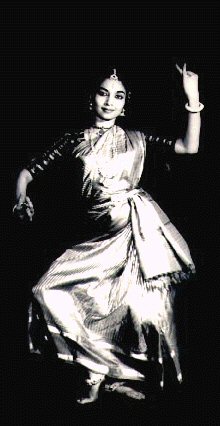
But it is perceived differently today, it is more like a barometer of
cultural refinement and apt narrative of human desires as much as expression
in dramatic performance from just being the source of amusement, on occasions
of marriage, child-birth, reception of son-in-law, general festivity and
attainment of prosperity”.
Bharata Natyam today has opened a plethora of opportunities for young learners; most of the universities in India have started or are in the process of starting separate department for performing arts which include Indian classical dance form along with folk dances besides other theatrical art forms. Government of India has introduced dance subject at school level, this has opened a substantial job opportunities for the dedicated and hard working students.
Dance as a career is not a forbidden thought anymore. Entertainment sector today has created huge opportunities for those who can perform, choreograph or even think dance. If we look around, we see these changes taking place rapidly. It has travelled from temples to television and from solo performance to group choreography. From Sadir to Bharata Natyam.
Think dance it makes life more meaningful and joyous even if you can’t dance, because it is the only activity which involves body, mind, soul and space simultaneously.
© Art India Net. ® 1998--2007. We welcome your suggestions and comments to improve this site. Please post an e-mail to add information.
Founder/ Content Editor/ Site Construction/ Maintenance: GS Rajan, Technical Advisor: Sudhir Gandotra Hosted by Communicators - Indserve Infotech P Ltd. © ®